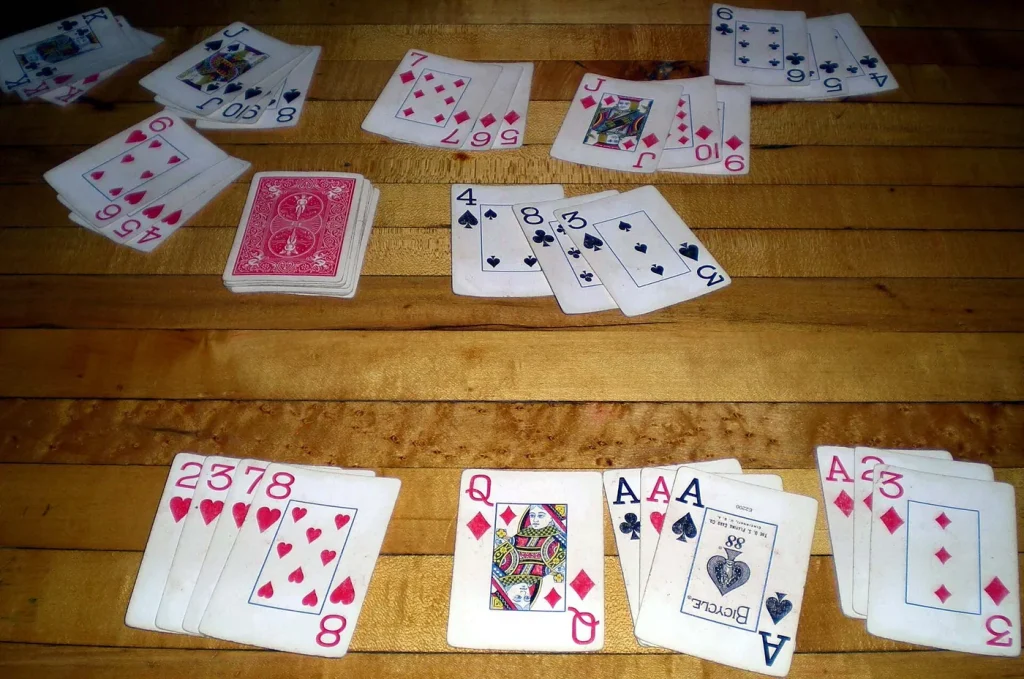
The 13-card melding game that defined India's "game of skill" jurisprudence — and built, then lost, a billion-dollar online industry.
Origin & popularity in India
Indian 13-card rummy is a domestic institution, strongest in the south. The Supreme Court's 1968 characterisation of rummy as preponderantly skill-based anchored five decades of case law and the entire online rummy industry — until the 2025 federal Act banned online money play regardless of the skill question.
Game mechanics
Players draw and discard to arrange 13 cards into sequences (at least one pure) and sets; the first valid declaration wins, with points scored against losers' unmatched cards.
Variations
- 13-card Points Rummy
- Pool Rummy (101/201)
- Deals Rummy
- 21-card variants
Regional popularity
The south is rummy country — Tamil Nadu, Andhra Pradesh, Telangana, Karnataka — with club play traditions elsewhere.
Legal considerations
Recognised as a game of skill by the Supreme Court (1968) for physical play; several states nonetheless banned staked play, and the 2025 Act prohibits online money rummy nationwide. Free-play formats continue.